

The Yamuna, the Ganga’s longest tributary, is largely polluted due to its course through the national capital. But many kilometres downstream, in one of India’s most drought-prone regions, it is robbed of sand.

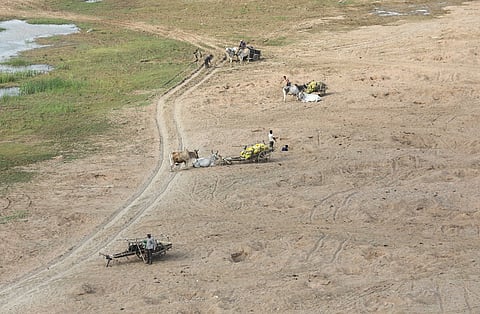
Large stretches of the Yamuna riverbed in Bundelkhand have become exposed during the dry season, allowing workers to extract sand for use in the construction industry. In these images, labourers using bullock carts can be seen collecting sand from the riverbed.
Sand is one of the most heavily extracted natural resources in India, driven by rapid urbanisation and infrastructure development. However, studies have found that excessive riverbed mining can alter river channels, increase erosion, reduce groundwater recharge and affect aquatic habitats.
Researchers have also warned that unchecked extraction may disrupt the natural connection between rivers and surrounding aquifers, threatening long-term water security in drought-prone regions such as Bundelkhand.