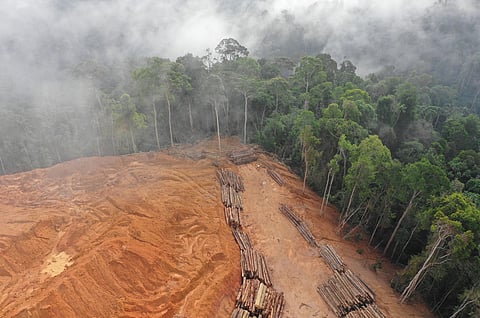


Businesses around the world are destroying the very natural systems they rely on to survive, a major global report released on February 9, 2026, has revealed.
The “Methodological Assessment of the Impact and Dependence of Business on Biodiversity and Nature’s Contributions to People” was published by the Intergovernmental Science-Policy Platform on Biodiversity and Ecosystem Services (IPBES) during the 12th session. It is also called the “Business and Biodiversity report”.
Experts, led by scientists from the UK, US, and Colombia, studied thousands of scientific papers and data from around the world in order to prepare the document.
“All businesses depend on and impact biodiversity,” the report emphasised. Every business — from farms and factories to offices — needs clean water, healthy soil, pollinators like bees, and a stable climate.
Yet human business activities are now the biggest reason that nature is being destroyed.
The US’s Stephen Polasky, who served as co-chair of the assessment, said in a press statement: “The loss of biodiversity is among the most serious threats to business. Yet the twisted reality is that it often seems more profitable to businesses to degrade biodiversity than to protect it.”
The numbers tell a shocking story. In 2023 alone, the world spent $7.3 trillion on activities that harm nature — $4.9 trillion from private companies and $2.4 trillion from government subsidies.
And only $220 billion went into protecting or restoring ecosystems. This massive imbalance shows that financial flows still reward harmful practices while nature protection remains underfunded.
Biodiversity loss is not just an environmental issue. It is now a major economic risk just like climate change. Crop failures from lost pollinators, floods from destroyed wetlands, water shortages from degraded rivers, and rising costs from scarce resources are already affecting multiple sectors.
Over the next decade, these risks are expected to rise sharply, affecting jobs, livelihoods, and food security worldwide.
Agriculture, forestry and fishing, mining, energy, construction, and transportation are the sectors causing the most damage. But even small businesses are connected through supply chains.
For example, grocery stores and restaurants may unknowingly source products from farms clearing forests or polluting rivers.
Yet, despite these clear risks, corporate accountability is low. Less than 1 per cent of companies mention biodiversity impacts in their reports. Most reporting is voluntary, many companies lack data about where their materials come from, and short-term profits are often prioritised over long-term survival.
The report also highlights the problem of greenwashing, where companies claim to protect nature but, in reality, only slightly reduce harm. True gains in biodiversity are rare.
The effects on communities are serious. Indigenous peoples, who have protected nature for generations, are the most affected.
Around 60 per cent of Indigenous lands globally are now threatened by industrial development, and nearly a quarter of these areas face high pressure from mining, logging, and energy projects.
Women, youth, and rural communities are particularly vulnerable. Ironically, businesses rarely seek Indigenous knowledge or share benefits fairly, even as they rely on resources from these lands.
“Respectful collaboration with Indigenous Peoples and local communities can translate into better management of business risks and opportunities,” said Ximena Rueda from Colombia, co-chair of the assessment, in the statement.
The rush for “green energy” is adding to the pressure. Mining for minerals for solar panels, wind turbines, and electric vehicle batteries often takes place on Indigenous lands, sometimes without consent, creating new conflicts.
The assessment explains why businesses struggle to act. Forests take decades to regrow, yet companies report quarterly profits.
Destroying nature is often cheaper than protecting it. Misaligned subsidies, lack of data, and perverse incentives further discourage sustainable practices.
The IPBES report calls for transformative change.
The UK’s Matt Jones, one of the co-authors, emphasised: “Businesses and other key actors can either lead the way towards a more sustainable global economy or ultimately risk extinction…both of species in nature, but potentially also their own.”
Immediate actions include phasing out harmful subsidies, making corporate reporting mandatory, enforcing new regulations to align profit with nature protection, and ensuring free, prior, and informed Consent (FPIC) for Indigenous communities.
Systemic reforms include redefining success beyond GDP, rewarding executives for long-term sustainability, reforming finance to support restoration, and integrating Indigenous knowledge into planning and decision-making.
The report stresses that individual businesses can act, but systemic change is essential.
Without regulations, responsible companies face higher costs while competitors continue harmful practices. Small and medium enterprises often lack resources to measure and manage impacts.
To change course, companies must integrate nature into all decisions, set clear biodiversity targets, track real outcomes, engage meaningfully with Indigenous communities, and improve supply chain transparency.
Banks and investors must redirect finance toward conservation and restoration.
For countries like India, the report’s findings are especially urgent.
Millions of people depend on agriculture, forests, and fisheries for their livelihoods. Environmental shocks, biodiversity loss, and climate change are already affecting farmers, fishers, and coastal communities.
Indian companies, banks, and regulators must integrate nature-related risks into financial and business planning immediately.