
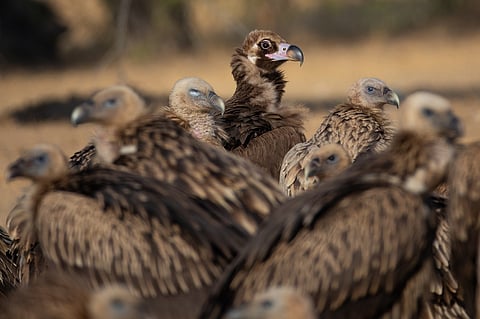

Thirty years ago, the vulture in India suffered a death knell of sorts to its existence. Diclofenac, a painkiller used for cattle, destroyed the kidneys of Indian vultures. Millions died as a result.

This caused a rise in feral dog populations in turn leading to a spike in rabies and human mortality.
Since then, the Indian government has banned diclofenac and a number of other Nonsteroidal Anti-Inflammatory Drugs.
Conservation programmes across India are now breeding vultures in captivity and releasing them in the wild.
However, with electrocution also rising as a threat to vultures in addition to chemicals, their future in India depends on ensuring that the landscapes into which they are released are safe.