

More biodiversity finance is beginning to reach Indigenous Peoples and local communities, but experts say control over how the money is spent remains the central question.
At recent GEF meetings in Samarkand, nearly 39% of new biodiversity funding went to IPLC-led projects, marking a shift in conservation finance.
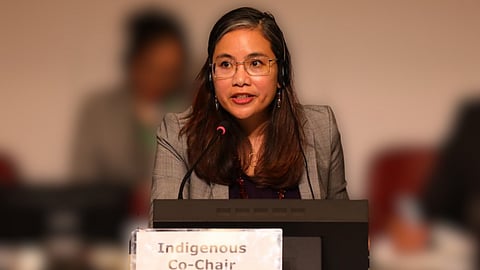
Dr June Rubis, an Indigenous representative on the Cali Fund Steering Committee, says direct access to funding is essential if communities are to set their own priorities.
The Cali Fund has committed 50% of its resources to IPLC-identified priorities, but company contributions remain voluntary and the system is still in its early stages.
More international biodiversity funding is starting to reach Indigenous Peoples and local communities, but experts say the bigger question now is whether they will have real power over how the money is used. Indigenous Peoples and local communities (IPLC), protect a large share of the world’s remaining biodiversity. But they have historically received less than a per cent of international biodiversity finance.
At recent Global Environment Facility meetings in Samarkand, nearly 39 per cent of new biodiversity funding went to IPLC-led projects, marking a significant shift in how conservation finance is being directed.
The money is moving, but the question is who controls it? To explore what this shift means in practice, Down To Earth spoke with Dr June Rubis, one of seven Indigenous representatives on the 24-member Steering Committee of the Cali Fund. Agreed at COP16, the Cali Fund is a new mechanism that asks companies profiting from nature’s genetic data to contribute to a fund for the countries and communities from which that data originates.
Rubis is among the few people helping decide, in real time, how that money should reach Indigenous Peoples and local communities — and how much control they should have over it.
For years, the conversation around biodiversity finance was almost entirely about volume: getting more money to flow towards IPLCs. That conversation has now shifted. The question is no longer only whether Indigenous Peoples receive funding, but whether that funding strengthens their own systems of governance or simply treats them as partners hired to deliver conservation projects designed elsewhere.
The distinction matters because it changes what communities actually become. If they are asked to implement someone else’s plan, they are project implementers. If they are allowed to decide what conservation looks like on their own lands and territories, they are decision-makers.
Both arrangements can look identical on a spreadsheet: money moving from a fund to a community. But they mean very different things on the ground.
This is why Rubis and other Indigenous representatives are focused not only on access to finance, but on control over finance. For communities that have protected biodiversity for generations, funding is not just a technical question. It is tied to self-determination, territorial rights, knowledge systems and the ability to govern according to their own priorities.
The Cali Fund has committed that 50 per cent of everything it raises will support priorities identified by Indigenous Peoples and local communities themselves.
But reaching communities is not simply a matter of transferring funds. Many Indigenous communities whose lands and territories have generated the genetic information that underpins the fund may never have heard of it. Others may not have the legal status, administrative systems or institutional capacity demanded by international finance mechanisms.
Two models are being debated within the Steering Committee.
One would send money first through national governments, which would then distribute it to communities. The other would allow funding to reach Indigenous organisations directly, without an additional government layer in between.
Rubis and the other Indigenous representatives strongly support direct access.
Direct funding, she argues, allows communities to define their own priorities instead of relying on another layer of approval. This does not mean excluding governments. Governments have an important role in biodiversity conservation, public accountability and national implementation. But the concern is that if funding flows only through governments, communities may gradually lose the ability to make their own decisions.
Keeping a direct route open, in Rubis’s view, is the point.
A formal Indigenous seat on a fund’s governing body is itself significant. Such representation barely existed a decade ago. A seat at the table means shaping the rules while they are still being written, rather than reacting after they have already been finalised.
But representation alone does not guarantee power.
The real test comes later: whether Indigenous priorities actually shape which projects get funded, whether smaller organisations can access money without being buried in paperwork, and whether communities gain genuine control over resources or are simply consulted on decisions made elsewhere.
There is a similar tension in how success is measured. If a fund decides in advance what a ‘successful’ community project looks like, that definition can become a barrier before any money reaches the ground. Communities may be forced through paperwork, reporting formats and impact indicators that do not reflect their own realities. These requirements can push out precisely the smaller Indigenous organisations the money is meant to support.
Rubis’s preferred sequence runs the other way. Start by asking the community what it wants to achieve. Then track progress using measures that reflect its own culture, history, governance and relationship with land, rather than applying one checklist everywhere.
Monitoring, in this view, should help communities do their work better. The moment it starts functioning as a gatekeeping tool, something has gone wrong.
This matters because many Indigenous governance systems do not fit easily into conventional project cycles. A donor may want short-term outputs, numerical indicators and standardised reporting. A community may be working across generations, guided by obligations to territory, ancestors, forests, rivers and future children. If funding systems cannot recognise those timeframes and values, they risk weakening the very systems they claim to support.
Underlying all of this is a more basic problem: no company is legally required to pay into the Cali Fund. Contributions are voluntary. Months after its launch, the fund had received its first contribution of only $1,000.
That is not necessarily a failure, but it does show how early the system still is. Creating a new global funding mechanism takes time because it depends on trust.
Companies need confidence that their contributions will be used effectively. Governments need assurance that the system respects national laws and public accountability. Indigenous Peoples need confidence that funding will strengthen their own governance rather than weaken it.
Rubis sees these not as competing interests, but as parts of the same system.
For the fund to work, it must be credible to companies, legitimate to governments and accountable to the communities it is meant to support. If any one of those pieces is missing, the system will struggle to move beyond good intentions.
But voluntary funding also raises a hard question. If companies can profit from genetic data but choose whether or not to share benefits, how secure can the system really be? For Indigenous Peoples, whose knowledge and territories have long been extracted from without consent or adequate compensation, voluntary payment may feel less like justice and more like a starting point.
Zooming out, the question is whether anything has really changed.
Has the language around Indigenous Peoples in biodiversity finance shifted more quickly than the power structures themselves? Or has the past decade produced a real transfer of decision-making authority?
Rubis believes there has been progress, at least in part.
A decade ago, ideas such as direct access to funding and Indigenous self-determination were often discussed only at the margins of international meetings. Today, governments broadly accept these principles. The discussion has shifted from whether Indigenous Peoples should have greater control to how that control can be achieved.
That shift, she says, is real.
What has not caught up is the machinery.
Building systems that can move money directly to Indigenous organisations, while also holding up across dozens of national legal contexts, takes years. As Rubis puts it, the principles have moved ahead of the institutions. The world has largely agreed on the destination. What is missing is the infrastructure to get there.
Samarkand confirmed that more biodiversity finance is reaching Indigenous Peoples and local communities than before. That is a genuine milestone.
But Rubis’s account makes clear that the next phase of this story is not only about the size of the number. It is about whether the people receiving that money also get to decide how it is used.
Funding without decision-making power simply relocates control. It does not share it.
Real change will come only when Indigenous Peoples are recognised not as beneficiaries or delivery partners, but as leaders whose own governance systems help determine what conservation looks like.
For decades, the challenge was finding enough money to protect nature. The next one may be harder: deciding who gets to decide how it is spent.