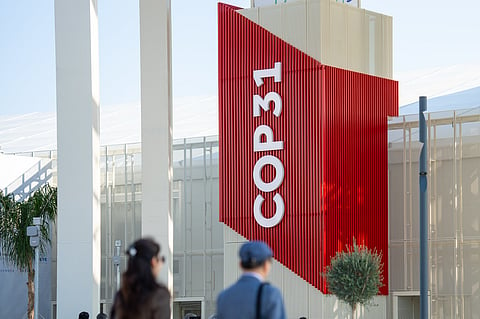


More than 10 ministers urge COP31 presidencies Türkiye and Australia to advance fossil fuel transition roadmaps.
Denmark, Luxembourg, Spain and Portugal announce new national plans.
Countries remain divided over energy choices, equity and financing.
Developing nations demand greater financial support for a fair transition.
More than 10 ministers have urged Türkiye and Australia, the presidencies of the 31st Conference of the Parties (COP31) to the United Nations Framework Convention on Climate Change (UNFCCC), to advance roadmaps for transitioning away from fossil fuels, as Denmark, Luxembourg, Spain and Portugal announced new national plans on November 17, 2026.
The Blue Pacific also announced a roadmap, adding to calls for the transition away from fossil fuels (TAFF) to remain central to negotiations at the UN climate summit in Antalya, Türkiye.
The announcements signal growing political support for turning the commitment made at COP28 in Dubai in 2023 into national action plans.
At COP28, countries agreed to transition away from fossil fuels in energy systems in a just, orderly and equitable manner, accelerating action this decade to achieve net-zero emissions by 2050.
However, negotiations at COP31 have exposed divisions over how that commitment should be implemented, whether international roadmaps could constrain national energy policies and how developing countries would finance the transition.
The European Union reiterated its support for transitioning away from fossil fuels, clean electrification and aligning financial flows with low-carbon development.
The Marshall Islands, speaking for the Alliance of Small Island States (AOSIS), called for a faster transition and warned against weakening the COP28 commitment. It also stressed that electrification must rely on clean energy and criticised how fossil fuel subsidies were addressed in the draft negotiating text.
Vanuatu called for a fossil fuel transition roadmap to feature prominently in the mitigation section of the COP31 cover decision, rather than towards the end of the document.
Several developing countries, however, raised concerns about the implications for their energy choices.
Tanzania said the transition must remain nationally determined, while Iran warned that the draft decision risked prescribing energy pathways and development priorities. Iran also called for greater financial and technological support from developed countries.
South Africa said initiatives under the COP31 action agenda, including fossil fuel transition roadmaps and the electrification pledge, must remain voluntary. It also emphasised affordable access to modern energy.
Indonesia supported using the transition away from fossil fuels as a guiding principle, but said faster implementation must be backed by predictable financing.
Developing countries have repeatedly argued that stronger climate commitments must be accompanied by finance, technology transfer and capacity-building support.
Romain Ioualalen, global policy lead at Oil Change International, said credible national roadmaps should set clear deadlines for ending coal, oil and fossil gas use, halt fossil fuel expansion and explain how the transition would be financed.
He accused wealthy countries of obstructing stronger public finance commitments while advocating fossil fuel transition roadmaps.
"If they're serious about fossil fuel phaseout they must step up with the public finance needed to make a fair and funded transition possible, especially for countries in the Global South that face the greatest barriers to moving away from fossil fuels," he said.
Andreas Sieber, head of political strategy at 350.org, also urged the COP31 presidencies to act.
"Türkiye and Australia must urgently stop ducking the defining issue of transitioning away from fossil fuels," he wrote on LinkedIn, calling on the two countries to respond to the ministers' demands.
The challenge for the COP31 presidencies is to translate growing support for fossil fuel transition roadmaps into a negotiated outcome that addresses concerns over national energy choices, equity and financing.