

With warming set to breach 1.5°C around 2030, COP31’s voluntary track highlighted cutting super pollutants — methane, black carbon, HFCs, and ground-level ozone — as the fastest way to slow near-term heating alongside long-term CO₂ cuts.
Every US $1 invested in 25 proven clean-air and climate solutions returns $4 to markets and $15 to society — adding up to US$10 trillion in health gains by 2040 and 4.5% to global GDP by 2050, while eliminating 75% of fossil-fuelmethane at little to no net cost.
While COP31 mobilised additional funding in philanthropy and more to expand the CCAC’s Country Action Accelerator to 14 nations, scaling private investment requires de-risking projects and accounting for health and other gains in national budgets.
While formal negotiations inside the negotiation rooms of COP31 in Antalya faced an impasse, a different story unfolded on the voluntary action track outside. There was a strong focus on tackling short-lived climate pollutants (SLCPs) — often called super pollutants — which include methane, black carbon, hydrofluorocarbons (HFCs), tropospheric ozone, and nitrous oxide.
For years, super pollutants were treated as a secondary concern behind long-term carbon dioxide (CO2) reductions. This framing is changing now. With the world projected to overshoot the 1.5°C warming threshold around 2030, UNEP’s Limiting Overshoot report warned that higher peak temperatures and prolonged overshoot pose serious risks to people and ecosystems alike. While deep CO2 cuts remain indispensable, cutting super pollutants can slow down warming.
As COP30 CEO Ana Toni described it, this acts as an “emergency brake,” curbing near-term warming and delaying climate tipping points.
Leading this charge on super pollutants is the Climate and Clean Air Coalition (CCAC), a voluntary, government-led partnership of countries, intergovernmental bodies, scientists, civil society, and businesses. In Antalya, the coalition mobilised further backing from state partners, subnational leaders, and financial institutions around the "co-benefit science" of super pollutants. This is breaking down the old silos that once separated climate policy, air quality, waste management, and public health.
Putting black carbon in the spotlight
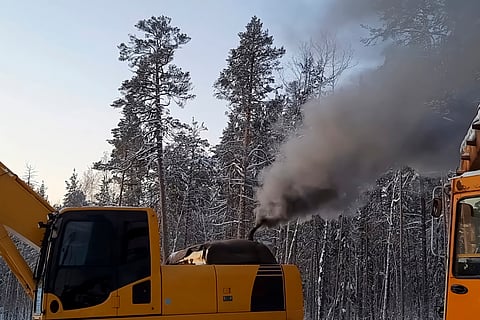
While methane has long dominated super-pollutant narrative, black carbon— commonly known as soot — drew substantial attention in Antalya. Black carbon drives roughly half of current global warming and trigger a range of diseases through diesel transport emissions, traditional cooking, wildfires, open waste burning and incomplete combustion.
Following urgent warnings from Nepal about soot accelerating deadly Himalayan glacier melt, there was an appeal to the policymakers to intensify action across black-carbon-emitting sectors.
The partnership gathered momentum as Mexico, Panama, and Cambodia officially joined the peer network on sectoral action on Black Carbon, expanding the coalition launched at COP30 to 12 nations alongside early members like Canada, Nigeria, and Uganda. They put on table their domestic pathways. Mexico is targeting a 51 per cent cut in black carbon by 2030, Panama is moving to replace older heavy-duty vehicles responsible for 85 per cent of its soot emissions, and Cambodia is tackling Super El Niño-driven wildfires. Several other governments highlighted their efforts at the CCAC Ministerial.

According to the new UNEP–CCAC Hidden Assets report, using 25 proven solutions across energy, agriculture, transport, cooling, and waste delivers a 15-fold return. Every $1 spent generates $4 in direct market returns and $15 in wider social benefits — such as lower healthcare costs, healthier and more productive workers, and less extreme-weather damage. By 2040, better health and fewer illnesses alone could add up to US$10 trillion to the economy, with total global gains reaching about 4.5 per cent of global GDP by 2050. International Energy Agency (IEA) Executive Director Fatih Birol notes that existing technology can cut at least 75 per cent of methane emissions from fossil fuel operations, often at low or no net cost.
A new UNDP report, The Overlooked Pollutant, highlights that curbing ground-level ozone alongside climate change protects human health while boosting crop yields. Hard data now backs up these climate wins. The UNEP’s International Methane Emissions Observatory (IMEO), satellite tracking and rapid field responses have plugged major methane leaks—delivering a climate benefit equal to taking 26 million cars off the road for a year. Meanwhile, World Bank programs across 45 countries are on track to cut 11 million tonnes of methane impacting lives for over 160 million people.
With constrained development funding and Small Island Developing States facing severe climate risks, developing countries stressed that turning goals into action demands affordable money, inter- ministerial coordination, and technical support.
There were also some funding breakthroughs. At the Leaders' Level Methane and Other Non-CO₂ Greenhouse Gases Summit — co-hosted by Brazil, China, and the UK — philanthropic partners pledged over US$480 million in new funding. Another US $25 million was added to double the CCAC’s Super Pollutant Country Action Accelerator to 14 countries. Seven new members including Uzbekistan. Canada, Finland, and Switzerland also gave fresh funds, backed by a new Ministerial Declaration.
To attract private investors, partners like Mexico and France are working with climate funds and development banks to strengthen institutions, lower investment risks, and include super-pollutant goals in NDCs and Biennial Transparency Reports. It was emphasised that the governments also need to realign national budgets. Because healthcare savings and bigger crop harvests from cleaner air are rarely accounted for, pollution control remains underfunded. Accounting for these gains in public budgets, with other fiscal measures can mobilise additional resources.
As the world looks toward COP32 in Addis Ababa, the lesson from Antalya is clear. Cutting super pollutants is not a fringe issue, but the fastest, cheapest way to slow near-term warming while bringing cleaner air, healthier communities, and immediate economic gains across the Global South.