
Subscribe

Heat waves in India are no longer rare—they are recurring, predictable, and structural. By April, temperatures often exceed 40°C, disrupting work, daily life, and increasing heat-related hospital admissions. Policy responses remain fragmented and reactive, while the poorest—daily wage labourers, informal workers, small farmers, and slum residents—bear the heaviest burden. Between 2001 and 2020, India lost an estimated 259 billion labour hours, worth nearly Rs 46 lakh crore, due to extreme heat.
Driven by global climate change and local environmental stresses, heatwaves are becoming more frequent, longer, and intense, especially in northern, central, and eastern India. In 2024, people experienced nearly 20 days of extreme heat, starting earlier and ending later, leaving little time for recovery and amplifying health risks.
Extreme heat, despite being one of India’s deadliest climate hazards, receives far less attention than floods or cyclones. Heat rarely leaves visible destruction and silently worsens heart and respiratory illnesses, damages kidneys, and causes dehydration and heatstroke. A study in Science of the Total Environment finds that urban heatwaves increase daily mortality by nearly 15 per cent, causing over 1,100 excess deaths annually. Poor households face the highest exposure due to overcrowded housing, heat-retaining roofs, limited water access, and unaffordable healthcare.
Due to heat waves, tens of thousands of suspected heatstroke cases have been reported across northern and eastern India. The HeatWatch dataset recorded 2,287 cases nationwide, while the National Centre for Disease Control (NCDC) reported 7,192 suspected cases between March 1 and June 24, 2025, with only 14 confirmed deaths. Historical data from 2015-2022 show deaths ranging from 3,436 to 8,171, underscoring severe underreporting and weakening evidence-based policymaking.
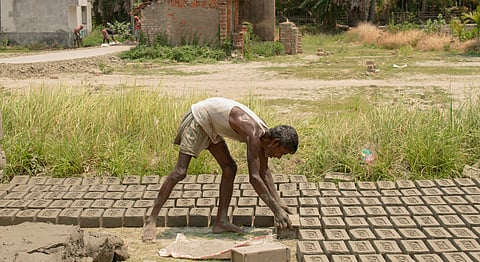
India’s economic vulnerability to heat is acute because a large share of its workforce depends on outdoor, heat-exposed occupations, such as agriculture, construction, transport, sanitation, and street vending. Rising temperatures slow physical work, reduce productivity, and threaten incomes. The Lancet Countdown estimates that in 2024, India lost about 247 billion labour hours due to heat, resulting in nearly $194 billion in economic losses, primarily in agriculture and construction. For daily wage workers, heat-related work stoppages mean immediate income loss, with no paid leave or social protection, forcing many to continue working under dangerous conditions. By 2030, heat stress could lead to 34 million job losses, disproportionately affecting low-skilled and informal workers and making extreme heat a growing driver of poverty.
Rural livelihoods are especially vulnerable. Agriculture, the primary income source for millions, is highly sensitive to temperature extremes. Heat waves reduce yields, shorten growing seasons, and push up food prices, with wheat production particularly affected. The UN ESCAP classifies Indian agriculture as “high risk” from heat stress. Small and marginal farmers—often without savings, insurance, or access to adaptive technologies—face rising debt, distress migration, and long-term insecurity. Livestock losses further compound vulnerability by reducing milk output, fertility, and animal survival.
Rapid urbanisation has intensified heat risks in Indian cities. Dense construction, paved surfaces, and declining green cover create urban heat islands. This causes temperatures to be several degrees higher than in nearby rural areas. The urban poor are most exposed. Informal settlements often lack trees, open spaces, reliable electricity, and safe housing. Power cuts during peak summer can turn homes into heat traps. Evidence from Ahmedabad and Surat shows that heat stress reduces worker productivity by around 10 per cent, particularly among migrant construction workers. Without climate-sensitive urban planning, heat risks for the urban poor will continue to escalate.
Heat waves exacerbate social inequalities. Low-income women face higher exposure from unpaid care, cooking, water collection, and farm work, increasing risks of kidney disease, heat illness, and pregnancy complications—yet policies rarely address these impacts. Children and the elderly are also highly vulnerable: school closures disrupt learning, and seniors without cooling face higher mortality. Heat impacts differ sharply by age, gender, and income, calling for targeted interventions.
India has made progress with Heat Action Plans, early warnings, and awareness campaigns, reducing mortality in cities like Ahmedabad. Yet implementation is uneven: over half of districts—home to nearly three-quarters of the population—face high heat wave risk but lack cooling shelters, trained health workers, reliable water, and enforceable worker protections. Heat is still treated as an emergency issue rather than a long-term development challenge.
Extreme heat hits the most vulnerable—poor households, informal workers, and small farmers—hardest, deepening inequality and poverty. Effective responses must go beyond warnings to include climate-resilient housing, enforceable labour protections, heat-sensitive urban design, stronger public health systems, and targeted social safety nets. How India addresses this challenge will determine who adapts and who is left behind as heat becomes the new normal.
Purna Chandra Padhan teaches at the Xavier Labour Relations Institute (XLRI) in Jamshedpur, Jharkhand, India
Sushanta Mahapatra teaches economics at ICFAI School of Social Sciences, IFHE, Hyderabad
Madan Meher teaches economics at Amity Business School, Amity University, Chhattisgarh
Views expressed are the authors’ own and don’t necessarily reflect those of Down To Earth