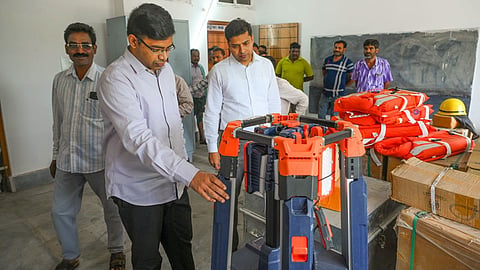


Cyclone Arnab intensified over the Bay of Bengal, prompting Odisha to evacuate 47,830 people from vulnerable areas.
Heavy rain and winds impacted southern districts, with shelters and relief funds allocated to ensure safety.
Authorities warned against spreading misinformation about the storm.
Heavy rain and strong winds hit several districts of southern Odisha on October 27, 2026, as very severe cyclonic storm Arnab intensified over the Bay of Bengal, prompting the state government to step up evacuation and emergency preparedness measures ahead of the cyclone’s expected landfall on October 28.
The Odisha government evacuated 47,830 people from vulnerable areas in eight districts and identified 466 cyclone and flood shelters to accommodate affected residents. Of those evacuated, 11,090 were from Nabarangpur; 11,000 from Gajapati; 9,850 from Malkangiri; 6,500 from Ganjam; 5,000 from Koraput; 2,415 from Kalahandi; 1,675 from Nuapada; and 300 from Rayagada, the state’s Revenue and Disaster Management Minister Suresh Kumar Pujari said in a statement from Bhubaneswar on October 27. The impact of the cyclone also brought heavy clouds, rainfall and squally winds to coastal districts, including Kendrapara, Jagatsinghpur, Puri, Bhadrak, Khurda and Balasore.
The storm is likely to move towards west-northwest before turning northwest and crossing the Andhra Pradesh and Yanam coasts between Bapatla and Visakhapatnam by the forenoon of October 28. The system is forecast to bring winds of 125-135 kmph, gusting up to 150 kmph. In a press statement dated October 27, Manorama Mohanty, director of the India Meteorological Department (IMD), Bhubaneswar, said the cyclonic storm intensified into a severe cyclonic storm over the west-central Bay of Bengal by midnight on October 26, further strengthening into a very severe cyclonic storm by the morning of October 27.
Special Relief Commissioner Rajesh Patil has released Rs 19 crore to support relief and preparedness operations in the eight affected districts. Ganjam received Rs 5 crore, while Malkangiri, Koraput, Rayagada, Gajapati, Nabarangpur, Kalahandi and Kandhamal were allocated Rs 2 crore each, as per Pujari.
Paradip Port Authority in Jagatsinghpur district has activated emergency measures to provide shelter and logistical support to fishing boats caught in the deteriorating weather conditions over the Bay of Bengal. By the evening of October 26, around 35 fishing boats carrying 305 fishers from Andhra Pradesh had taken refuge at Paradip, port officials said in a statement.
The emergency response followed a request from the Andhra Pradesh’s fisheries department, which informed the port authority that several mechanised fishing boats operating near Paradip and Gopalpur were unable to return to Visakhapatnam Fishing Harbour because of strong winds, heavy rainfall and turbulent seas, said Susanta Kumar Purohit, chairperson, Paradip Port Authority in Paradip. The port authority coordinated with the Indian Coast Guard, Odisha Marine Police and other agencies to facilitate safe berthing and to provide assistance to the stranded fishers, Purohit said.
The Odisha government has cautioned the public, media organisations and social media users against circulating false, misleading or speculative information about the storm. An advisory issued by the Office of the Special Relief Commissioner on October 26 says that those deliberately spreading fake disaster alerts could face legal action.
The government has expressed concern over unverified claims about the cyclone's track, landfall location, timing and likely impact being circulated through social media, digital platforms and some media channels without scientific validation. Print, electronic and digital media organisations have been asked to verify information against official IMD bulletins and advisories issued by the Special Relief Commissioner and district administrations before publication.
District collectors and district disaster management authorities have also been directed to ensure the timely dissemination of authenticated weather warnings through official channels and take appropriate measures to counter misinformation.
