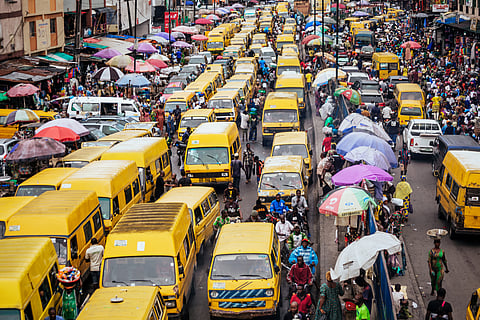


Economic Survey 2025–26 recommends congestion pricing to ease traffic in India’s most crowded cities
Policy document cites London and Singapore as successful global examples
Survey says road pricing, combined with parking reforms, could cut emissions and improve travel speeds
Experts say technology now allows congestion charges to be collected without disrupting traffic
The Economic Survey 2025-26, tabled in the Parliament on January 29, 2026, has recommended congestion pricing as a way to ease traffic, cut emissions and improve mobility in the country’s most dense business districts, drawing on examples from London and Singapore.
The survey argues that targeted congestion pricing in the crowded commercial areas, combined with demand-based parking management, could help reduce traffic volumes, increase average travel speeds and lower pollution levels, reflecting outcomes seen in several global cities.
Several Indian cities ranked among the world’s slowest for travel in the TomTom Traffic Index 2025, with Bengaluru and Kolkata among the worst affected.
Congestion pricing, also known as value pricing, is a fee charged for travelling on heavily congested roads, typically during peak hours. The Economic Survey describes it as a way of ensuring that road users absorb the wider costs of congestion, including lost time, air pollution and wasted fuel.
By making the true cost of driving visible, the policy aims to limit the number of private vehicles on the most crowded corridors at peak times. The survey says this can improve travel speeds, promote public transport and carpooling, and discourage unnecessary or off-peak travel by private vehicles.
The survey highlighted Singapore’s Electronic Road Pricing (ERP) system, which automatically charges vehicles as they pass under toll gantries during busy periods. Decades of data from Singapore show that the system has been highly effective in managing traffic demand.
It also points to the London Congestion Charge, a cordon-based system that requires vehicles to pay a daily fee to enter, exit or move within a defined area of central London. According to the Survey, both models demonstrate how pricing can be used to regulate road use without disrupting traffic flow.
Experts say the idea is not new. Ramnath Jha, Distinguished Fellow at the Observer Research Foundation in Mumbai, noted that congestion pricing was first tried in Singapore in 1975. Since then, cities including Durham (2002) and London (2003) in the United Kingdom, Stockholm in Sweden (2006), Milan, Italy (2008) and Gothenburg in Sweden (2013) have adopted similar systems. New York City launched the first congestion pricing program in the United States on January 5, 2025.
Jha said that many Indian architects, transport experts and urban planners have long argued for congestion charges in Indian cities, where traffic congestion in major urban centres is often worse than in cities such as New York. In Delhi, the idea was proposed by the Lieutenant Governor Anil Baijal in 2018, but was never implemented. Similar discussions have taken place in Mumbai, including at the Mumbai Metropolitan Region Development Authority.
In 2025, Down To Earth and Delhi-based think tank Centre for Science and Environment published a series of reports titled How India Moves, which analysed traffic congestion in 50 cities and towns nationwide. The findings underscored a close connection between mobility patterns and air quality, revealing that travel times had doubled in several cities and that congestion now extends far beyond traditional peak hours.
Jha underlined the wider impacts of traffic congestion in India’s cities, including longer travel times, higher fuel consumption, rising carbon emissions and increased health risks. These, in turn, affect the economic productivity of urban areas.
According to Jha, the benefits of congestion pricing are now clearer because technology has made it possible to automate charges without interrupting traffic. He said such systems can reduce congestion while also generating revenue for cities.
That revenue, he added, could help offset the cost of running congestion charging schemes and be reinvested in maintaining roads or developing new transport routes. Over time, congestion pricing could also encourage greater use of public transport and reduce fuel consumption from private vehicles, easing pressure on the country’s overstretched urban road networks.
