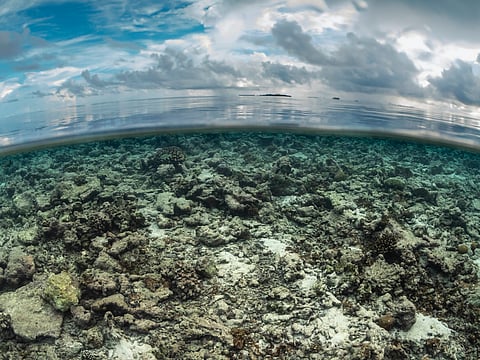


The Global Fund for Coral Reefs announced $30 million at COP31 to protect reefs in 22 countries, addressing critical threats like climate change and pollution.
The funding supports conservation, sustainable businesses, and coastal communities, aiming to restore biodiversity and livelihoods while combating coral reef collapse.
The Global Fund for Coral Reefs (GFCR) has announced more than $30 million in new investments and donor contributions to protect coral reefs across 22 developing countries.
The announcement, made at the UN climate conference COP31 in Antalya, comes amid warnings of accelerating coral reef degradation. Nearly 96% of assessed warm, shallow-water coral reef ecosystems are classified as critically endangered, while virtually all coral reef ecosystems face a high risk of collapse within a human lifetime, according to a statement accompanying the announcement.
The funding includes new government commitments, support for conservation organisations and financing mechanisms intended to attract investment into businesses that benefit reefs and coastal communities.
"We are racing against time to protect coral reefs from climate change, pollution and other pressures," said Inger Andersen, executive director of the UN Environment Programme (UNEP).
She said reefs could recover when governments and investors supported their protection and restoration, benefiting biodiversity, fisheries, livelihoods and coastal protection.
Coral reefs provide habitat for nearly a quarter of marine species and support millions of people through fishing, tourism and other coastal activities.
In Central America, the Mesoamerican Reef (MAR) Fund will expand financing for reef conservation across 18 priority sites in Mexico, Belize, Guatemala and Honduras.
The investments will support wastewater treatment, management of sargassum seaweed and financial instruments, including guaranteed loans and parametric insurance, for small-scale fishers, according to the GFCR.
In Indonesia, Yayasan Konservasi Alam Nusantara (YKAN) will expand its Biru Fund to provide recoverable grants to businesses involved in sustainable shrimp farming, seaweed production, fisheries and waste management.
The programme will also develop financing mechanisms for marine protected areas.
In the Philippines, Blue Alliance will support the management of marine protected area networks covering approximately one million hectares in Mindoro and north-eastern Palawan.
The initiative aims to generate long-term conservation revenue and benefit more than 1.1 million people in surrounding communities, according to UNEP.
In Zanzibar, Tanzania, funding will address pressures on coral ecosystems while supporting climate adaptation for approximately 21,000 coastal residents.
Coral reefs are increasingly threatened by rising ocean temperatures, pollution and other human pressures.
Pierre Bardoux, director of the GFCR, described coral reefs as the first part of the Earth system to cross a climate tipping point, warning that economic and financial systems continued to overlook the costs of their destruction.
The UK also announced £11.8 million in support for sustainable ocean economies.
"Healthy oceans are essential to our global resilience to climate change and our long-term food security," said Dame Angela Eagle, the UK's Environment Secretary.
She said investment in ocean restoration could support jobs, food security and coastal communities.
The GFCR said its financing approach was intended to combine conservation with economic opportunities, helping communities protect reefs while reducing activities that contribute to their degradation.
