

Experts from around the world will meet in Geneva for the 28th meeting of the Plants Committee (PC28) of the Convention on International Trade in Endangered Species of Wild Fauna and Flora (CITES), the wildlife trade treaty. This is the first plant-focused meeting since CoP20, the treaty’s big global conference, ended in Samarkand, Uzbekistan in December 2025.
The meeting will run from July 17-23, 2026, at the International Conference Centre Geneva (CICG) in Switzerland, right after the 34th meeting of Animals Committee (AC34, July 13-17). Both committees will also hold a joint session to discuss issues common to plants and animals.
Plants are the quiet majority of CITES. Of the more than 41,000 species the convention regulates, over 80 per cent are plants like timber trees, orchids, cacti, aloes, cycads, and medicinal and aromatic plants among them.
Unlike well-known animals such as elephants or tigers, plant trade rarely makes headlines, even though it matters a great deal to furniture makers, perfume companies, herbal medicine industries, and forest communities who depend on these plants for a living.
The Plants Committee is one of two permanent scientific bodies under the convention, the other being the Animals Committee. Its job is to give scientific and technical advice on species that are, or could become, subject to trade rules. The committee has around a dozen members and alternates, elected from different world regions, Africa, Asia, Europe, North America, Central and South America and the Caribbean, and Oceania. Between the big global conferences held every three years, the committee reviews plant names, checks the impact of trade, flags species being overused, and suggests fixes.
PC28 is important because it is the first Plants Committee meeting of a new three-year cycle, running up to the next big conference, CoP21, expected in Panama City in November 2028. At CoP20 in 2025, countries adopted more than 250 decisions, many of which now need to be turned into working guidance on how trade permits should be issued and how trade should be monitored.
The committee will cover range of topics like strategic and capacity-building matters, illegal trade and enforcement, exemptions and special trade rules, regional reports, and nomenclature, which is the standard scientific naming of species used to keep trade permits consistent across the 185 member countries.
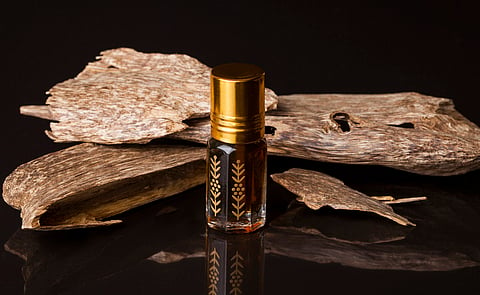
On individual species, the committee is expected to focus heavily on the timber trade, including African and South American rosewoods, Brazil wood used in violin bows, and African mahoganies and ebonies, along with agarwood-producing plants such as Aquilaria and Gyrinops species, for which the committee has been refining trade guidance since 2022.
The Review of Significant Trade, a process that checks whether trade in a species is being carried out sustainably, will again be on the table, this time looking at rosewood and agarwood trade, forest conservation linked to CITES, and the traceability of Brazil wood used in musical instrument bows.
For the first time, fungi will be discussed as a separate agenda item, a sign that CITES’ scientific interest is widening beyond plants and animals.
The last Plants Committee meeting, PC27, was held in Geneva in July 2024 where the committee updated standard names for several plant groups, including orchids, ebonies, African mahoganies and yews, looked at a global study on the trade in edible orchids used in dishes like salep and chikanda, and continued work on agarwood trade guidance through a working group that India was part of.
These discussions were fed into CoP20, held in Samarkand from late November to early December 2025. Countries reviewed ten proposals to change the CITES lists for plants. Proposals to remove protections for red doussié, African padauk and Parlatore’s podocarp were voted down, while the Chilean palm was added to Appendix I, the strictest protection category, by consensus. Guggul, a plant used widely in Ayurvedic medicine, saw a more dramatic turn, a European Union proposal to list it under Appendix II was rejected at first, in a committee-level vote where India argued that a proper population study was needed before any decision.
But in the final days of the conference, the matter was reopened, and the listing was ultimately adopted, with an exemption carved out for many finished retail products such as tablets, capsules, perfumes and incense sticks. PC28 will now largely focus on turning these CoP20 decisions into working guidance on the ground.
India has a real, though often overlooked, stake in these discussions, and guggul is the clearest example. India opposed the plan to place guggul (Commiphora wightii) under Appendix II, saying the case for listing needed stronger scientific backing, and was supported by countries including the Central African Republic and Congo. Even though the listing went through in the end, the agreed exemption for many finished products softens its impact on India’s Ayurvedic industry, and Indian authorities will now be closely involved in working out how the new rules are implemented and enforced.
Agarwood is the other big issue for India. The country has previously succeeded in keeping agarwood (Aquilaria malaccensis) out of CITES’ Review of Significant Trade, arguing that most of its agarwood trade comes from cultivated plants grown in Assam, Manipur, Nagaland and Tripura rather than from the wild. This helped India secure a considerably higher export quota. India is also part of the international working group refining agarwood trade guidance, so PC28’s discussions will directly affect farmers and traders in the Northeast, an industry worth crores of rupees a year.
Beyond these two species, India is home to red sanders, sandalwood, and a wide range of CITES-listed orchids and medicinal plants.
Decisions taken at PC28 on naming, trade monitoring and sustainability checks will shape export quotas and enforcement rules for these species too.