
Subscribe

Hard coral cover in the Caribbean has dropped by 48% between 1980 and 2024, new monitoring shows.
Repeated mass bleaching events — in 1998, 2005 and 2023–24 — drove major declines.
Stony Coral Tissue Loss Disease, now spread across 30 countries, is causing unprecedented mortality.
Losses of key herbivores such as the Diadema sea urchin have fuelled an 85% surge in macroalgae.
Rising sea temperatures, growing coastal populations and invasive species are reshaping reef ecosystems.
Hard corals across the Caribbean have declined by almost 50 per cent in just over four decades, according to new global monitoring data that point to rising ocean temperatures and fast-spreading diseases as key drivers of the collapse.
A major new assessment by the Global Coral Reef Monitoring Network (GCRMN) has reported a dramatic decline in hard coral populations (48 per cent) between 1980 and 2024, even though coral reefs are home to nearly one-third of all marine species. The network, which brings together scientists, organisations and reef managers worldwide, tracks the status and health of coral ecosystems.
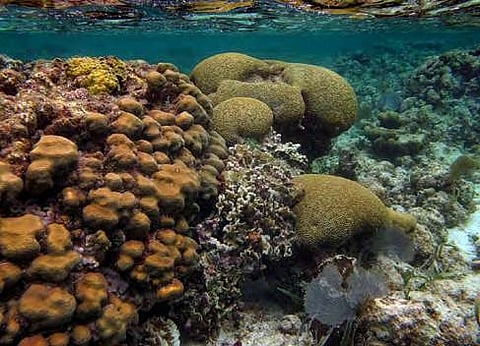
Hard corals, also known as stony corals, are marine animals that build the limestone frameworks upon which reefs form. Composed of thousands of tiny polyps that secrete calcium carbonate, they create the rigid, rock-like structures that underpin entire reef ecosystems. Soft corals, by contrast, lack these skeletons and resemble plants or trees.
Coral reefs across the GCRMN Caribbean region cover 24,230 square kilometre — amounting to 9.7 per cent of the world’s total coral reef area.
“Early monitoring data indicate that hard coral cover across the Caribbean ranged between 29 per cent and 38 per cent before 1983,” the report said. “Between 1983 and 2024, our analyses reveal that hard coral cover has declined by half, from 28.1 per cent in 1980-1985 to 14.6 per cent in 2019-2024.”
Large declines aligned with region-wide bleaching events driven by extreme heat, including in 1998 (-9 per cent), 2005 (-17.1 per cent) and during the ongoing 2023-24 global bleaching episode (-16.9 per cent), the assessment found. The 2024 figure is likely an underestimate due to limited data from the ongoing fourth global mass bleaching event.
The report highlighted the dramatic collapse of Acropora corals, once dominant reef builders, which made up about 16 per cent of benthic cover in the 1970s. Their numbers “declined sharply before 1980 due to anthropogenic stressors and widespread outbreaks of white band disease. Since then, results indicate that the benthic cover of these branching hard coral species has remained low since 1980, averaging around 1.8 per cent,” the report said.
A more recent and severe threat, stony coral tissue loss disease (SCTLD), first detected near the Port of Miami in 2014, has now spread to at least 30 Caribbean countries. Affecting more than 30 coral species with very high mortality rates, the disease is considered the most devastating ever recorded. Even minimal infection can trigger rapid outbreaks and undermine long-term recovery by killing newly settled coral recruits.
Populations of the sea urchin Diadema antillarum,once the region’s most important herbivore, have also crashed following mortality events in 1983-84 and again in 2022. Their loss has sharply reduced grazing pressure, allowing turf and macroalgae to proliferate across reefs, the report observed.
The assessment notes that Orbicella species, a group of massive hard corals, declined after the 1998 bleaching event and have since stabilised at around 5 per cent cover. In contrast, Porites corals increased by 164 per cent between 1980 and 2024, reaching an average cover of 3.7 per cent in recent years.
Reef complexity and biodiversity have declined, the study underlined, while macroalgae cover has surged by nearly 85 per cent since 1980. This is likely due to falling herbivore populations such as parrotfish and sea urchins and rising nutrient levels.
The seas have been notably warming over the last four decades, impacting coral reefs across all regions. Sea surface temperatures across the Caribbean’s coral reef areas increased by 1.07°C between 1985 and 2024, a warming rate of 0.27°C per decade. The steepest rises were recorded in Mexico’s Gulf of Mexico region, Guatemala, and the Flower Garden Banks National Marine Sanctuary, where temperatures climbed by around 1.4°C.
Anthropogenic pressure is also increasing. The number of people living within 20 km of coral reefs grew by 27.6 per cent between 2000 and 2020: An increase of about 13 million people across the region.
Invasive species are adding to the strain. Lionfish (Pterois volitans) have posed a major threat for almost two decades, while newer soft coral invaders like Unomia stolonifera (Venezuela, 2014), Xenia umbellata (Puerto Rico, 2023) and Latissimia ningalooensis (Puerto Rico, 2025) are rapidly spreading. Their fast growth and resilience allow them to overtake hard corals, reshaping reef communities and intensifying ecological disruption.
