

Solar and wind investment in emerging markets could reach $356 billion by 2040, according to Zero Carbon Analytics.
Renewable energy could account for 42% of electricity generation in emerging and developing economies by 2030.
Financing costs for large solar projects were up to twice as high as in advanced economies, threatening investment.
India's renewable energy expansion offers lessons in policy support, infrastructure and payment reforms.
African markets face additional challenges from unreliable electricity demand and high perceived investment risks.
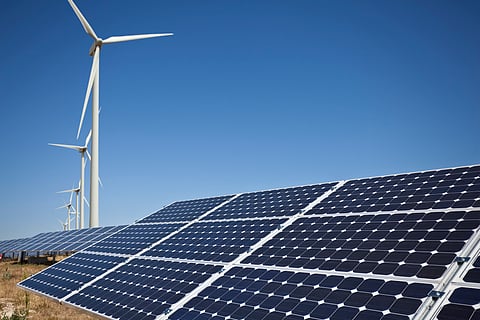
Investment in solar and wind projects across emerging markets could reach $356 billion by 2040 if current trends continue, but high borrowing costs and investment risks could slow the expansion of renewable energy, according to a new analysis.
The Zero Carbon Analytics (ZCA) report, drawing on data from Rystad and the International Energy Agency (IEA), estimates that renewables could account for 42 per cent of electricity generation in emerging and developing economies by 2030.
Achieving this would require an additional 3,251 gigawatts (GW) of renewable capacity, rising to more than 4,000GW under an accelerated scenario.
The IEA estimates that these economies will need $300 billion annually for electricity grid infrastructure. Yet the cost of capital for large solar projects was up to twice as high as in advanced economies between 2015 and 2024.
The analysis suggests that perceived investment risks are driving up borrowing costs, potentially preventing financially viable renewable energy projects from securing funding.
Data from the Global Emerging Markets Risk Database, established by the European Investment Bank and the International Finance Corporation, showed that private-sector loans by multilateral development banks and development finance institutions carried an average lending spread of 3.77 per cent between 2006 and 2025.
The average realised loss rate was 0.9 per cent, a difference of 2.87 percentage points.
Although lending spreads cover other costs and risks beyond defaults, the figures raise questions about whether some emerging-market projects are being charged excessively for finance.
A 2025 Organisation for Economic Co-operation and Development assessment cited in the analysis classified 80 per cent of rated African countries as high or very high risk.
Matt Tilleard, chief executive of CrossBoundary Energy, said development banks often overestimated risks while underestimating returns from private-sector lending.
"They have charged an average margin of nearly four per cent on their loans, while losing less than one per cent to defaults," he said.
He argued that lenders frequently assessed projects based on country-level risks rather than their financial performance, comparing the practice to "pricing car insurance by postcode without ever checking the individual driver's record".
Tilleard cited CrossBoundary Energy's solar and battery facility at the Kamoa-Kakula copper mine in the Democratic Republic of the Congo, which he said saved around $11 million in diesel costs each month.
"Solar projects in these markets end up paying up to double the cost of capital they would in a rich country," he said, adding that many viable projects consequently never proceeded.
India reached 500GW of total installed power capacity in 2025, with non-fossil fuel sources accounting for 50 per cent, achieving that share five years ahead of its target.
Solar capacity grew from 0.09GW in 2010 to more than 190GW in 2025, while the country is targeting about 60 per cent non-fossil fuel capacity by 2035.
India's expansion has been supported by long-term renewable energy targets, predictable procurement, transmission infrastructure and measures to improve electricity payments.
The government has established an annual bidding target of 50GW through financial year 2028. Renewable energy parks provide land and transmission access, while foreign direct investment of up to 100 per cent is permitted in the electricity sector.
Other measures include subsidies, viability gap funding, transmission charge exemptions and renewable electricity consumption obligations.
Payment reforms have also helped reduce outstanding dues from electricity distribution companies. Arrears fell from Rs 1,39,947 crore ($14.8 billion) in 2022 to Rs 4,109 crore ($433 million) in February 2026.
According to Rystad data cited by ZCA, India's wind and solar capacity grew by more than 20 per cent annually on average since 2020.
However, maintaining this pace will require affordable finance, stronger grids and reliable payments as renewable capacity expands.
Egypt, Nigeria and Senegal are also pursuing renewable energy expansion, but the analysis highlights the need for electricity demand that can reliably generate revenue.
Electricity demand between 2025 and 2030 is projected to increase by 21 per cent in Egypt, 36 per cent in Nigeria and 32 per cent in Senegal.
Egypt has set a target of 45 per cent renewable electricity generation by 2028, rising to 61.2 per cent by 2040. Nigeria aims to generate 50 per cent of its electricity from renewable sources by 2030, while Senegal is targeting a 40 per cent renewable share of installed electricity capacity by the same year.
All three countries have introduced policy reforms and financial incentives to attract investment.
Carlijn Nouwen, co-founder of Climate Action Platform Africa, said the challenge in African electricity markets was often not generation capacity but finding customers who could reliably pay for power.
"Off-grid programmes reach households, but energy-poor consumers are a real need, not yet a bankable one; productive and industrial use is what changes the economics," she said.
Industrial activity, green hydrogen production and electric motorbikes could help create demand that makes renewable projects financially sustainable, she added.
Blended finance, which combines public or concessional funding with private investment, is increasingly being used to reduce financing risks.
India's $944.5 million Green Growth Fund combines public equity and concessional capital, while Nigeria's $188 million Green Finance and Investment Facility aims to support 40 interconnected mini-grids.
The World Bank's $750 million renewable energy access programme in Nigeria uses grants and guarantees to encourage private investment. In Egypt, the European Bank for Reconstruction and Development arranged a $265 million concessional loan for a solar and storage project in October 2026.
Nigeria installed more than 800 megawatts of solar capacity in 2025, becoming Africa's second-largest solar market, according to the analysis. Senegal has attracted more than $500 million for solar and wind projects since the mid-2010s.
However, the effectiveness of blended finance will depend on whether it reduces borrowing costs at scale rather than simply compensating investors for high perceived risks.
With development assistance budgets shrinking and climate finance needs increasing, the analysis points to the importance of transparent procurement, reliable grid connections and better assessment of individual project risks.
For India and other emerging economies, the projected $356 billion investment opportunity will depend on whether affordable financing and dependable electricity demand can turn renewable energy targets into operational projects.