

Bulleted standfirst
Telangana received a Rs 1 increase in the revised wage rate under VB-GRAMG, which came into effect on July 1, 2026.
Maharashtra and Andhra Pradesh saw Rs 5 hikes each, while Dadra and Nagar Haveli recorded no increase from the previous MGNREGA wage rate.
Sikkim and Nagaland received among the highest increases, with wage rates rising by Rs 61 and Rs 59 respectively.
Workers’ groups and researchers say the revised wages remain below minimum wage levels in many states and do not address long-standing concerns over rural employment guarantees.
Telangana has received a Rs 1 increase in the revised wage rate under the Viksit Bharat – Guarantee for Rozgar and Ajeevika Mission (Gramin) [VB-G RAM G], which came into effect on July 1, 2026.
The Union government announced the revised unskilled wage rates on June 30, a day before the new rural employment law replaced the Mahatma Gandhi National Rural Employment Guarantee Act (MGNREGA). The revised rates show wide variation across states and Union Territories. The Andaman and Nicobar Islands received a Rs 6 increase, while Dadra and Nagar Haveli saw no increase compared with the previous MGNREGA wage rate.
The wage rate for Telangana has been raised from Rs 307 to Rs 308. Maharashtra and Andhra Pradesh have received increases of Rs 5 each, with wages revised from Rs 312 to Rs 317 in Maharashtra and from Rs 307 to Rs 312 in Andhra Pradesh.
The highest increase was in Sikkim, where the wage rate rose by Rs 61, from Rs 389 to Rs 450. Nagaland received a Rs 59 increase, from Rs 241 to Rs 300. Himachal Pradesh’s wage rate rose from Rs 272 to Rs 300.
Workers’ groups said the increases remain inadequate and warned that wages under VB-GRAMG are still not at par with minimum wages in many states.
VB-GRAMG, which replaced MGNREGA in December 2025, promises 125 days of work to the rural population. The new programme places water security, rural infrastructure, livelihood-related assets, disaster mitigation and climate resilience at the centre of rural works planning.
However, workers’ organisations and activists have criticised the new law, arguing that it does not address longstanding concerns under MGNREGA, including low wages, delayed payments and insufficient budget allocations.
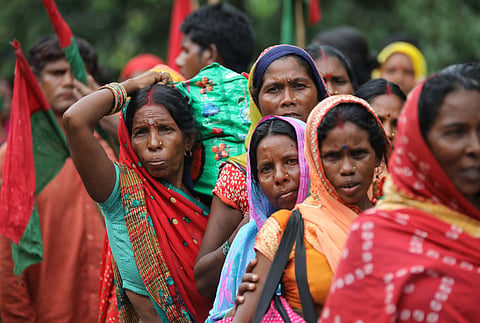
At a press conference on June 17, 2026, the NREGA Sangharsh Morcha, a collective of workers’ organisations, trade unions and grassroots activists, said it would continue demanding the repeal of VB-GRAMG and the reinstatement of MGNREGA in a strengthened form.
The collective said the current allocation would be inadequate to fulfil the Centre’s 125-day job guarantee. It also said workers would continue protests at different locations across the country.
Chakradhar Buddha, a researcher with LibTech India, said VB-GRAMG did not resolve the problems that existed under MGNREGA. LibTech India is a platform for social workers, engineers and social scientists working towards improvement of public service delivery.
“It will continue to carry legacy problems, including budget allocation and wages. The increase in wages will not be able to meet minimum wages in many states, an issue that persisted under MGNREGA as well,” he said.
The wage revision is likely to add to concerns among workers’ groups, which have argued that the legal guarantee of rural work is meaningful only if wages are adequate and payments are timely.
