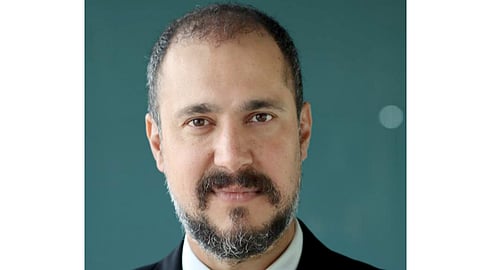


Professor Kaveh Madani named 2026 Stockholm Water Prize laureate at UNESCO ceremony in Paris
Youngest recipient in the award’s history and first UN official to be honoured
Recognised for linking water science with policy, diplomacy and global outreach under political risk
Known for “water bankruptcy” concept shaping global debate on long-term water scarcity
Kaveh Madani, director of the United Nations University Institute for Water, Environment and Health (UNU-INWEH), has been named the 2026 recipient of the Stockholm Water Prize, widely regarded as the world’s most prestigious award for water-related work.
The announcement was made on March 18, 2026 at UNESCO headquarters in Paris, ahead of World Water Day. The prize will be formally presented by Sweden’s King Carl XVI Gustaf in August during World Water Week in Stockholm.
Madani, 44, is the youngest laureate in the award’s 35-year history, as well as the first UN official and the first former politician to receive the honour.
The Stockholm Water Prize committee said Madani was selected for his “unique combination of groundbreaking research on water resources management with policy, diplomacy and global outreach, often under personal risk and political complexity”.
His career has been marked not only by scientific achievement but also by political controversy in his home country, Iran.
After returning to Iran in 2017 to serve as deputy vice president and deputy head of the Department of Environment, Madani pushed for reforms in water governance and transparency. His efforts drew backlash from hardline groups, and state-aligned media accused him of espionage and labelled him a “water terrorist” and “bioterrorist”.
He was arrested and interrogated multiple times before being forced into exile in 2018. He later took up an academic role at Yale University before moving into the UN system.
Madani is known for introducing the concept of “water bankruptcy” to describe a condition in which water shortages are no longer temporary crises but reflect long-term systemic failure.
In a recent UN report, he argued that the world entered an era of “global water bankruptcy” in January 2026, with many river basins and aquifers unable to recover to historical levels. The framing has influenced policy debates by shifting focus from short-term crisis management to long-term adaptation.
His research has also applied game theory and decision analysis to water resource management, challenging assumptions of cooperation in traditional models and offering new approaches to resolving disputes and managing shared resources.
Born in Tehran in 1981, Madani studied civil engineering at the University of Tabriz before pursuing further studies in Sweden and the United States. He later held academic positions in the US and the UK, including at Imperial College London.
Beyond academia, he has played a role in global environmental diplomacy, including serving as vice president of the UN Environment Assembly bureau. He has also advocated for greater attention to water issues in international climate negotiations.
Now leading UNU-INWEH, often described as the UN’s “think tank on water”, Madani works with governments worldwide to bridge scientific research and policy.
Madani has also gained prominence as a public communicator, using social media, digital campaigns and storytelling to make water science accessible to wider audiences.
With a large online following, he has sought to encourage public engagement and accountability on water management, particularly among younger audiences.
Announcing the award, the prize committee highlighted not only his scientific contributions but also his efforts to translate research into action “under extreme personal risk and political complexity”.